
Tonight, stay off the roof, keep water away from anything electrical, and get people out from under a ceiling that's sagging. Catch the water, move what's underneath, and photograph everything before you clean up, then call your insurer as soon as you can. After snow, the usual culprits are ice dams, snow blown in through vents, and worn flashing or pipe boots, and sometimes it's attic frost melting rather than a roof leak at all.
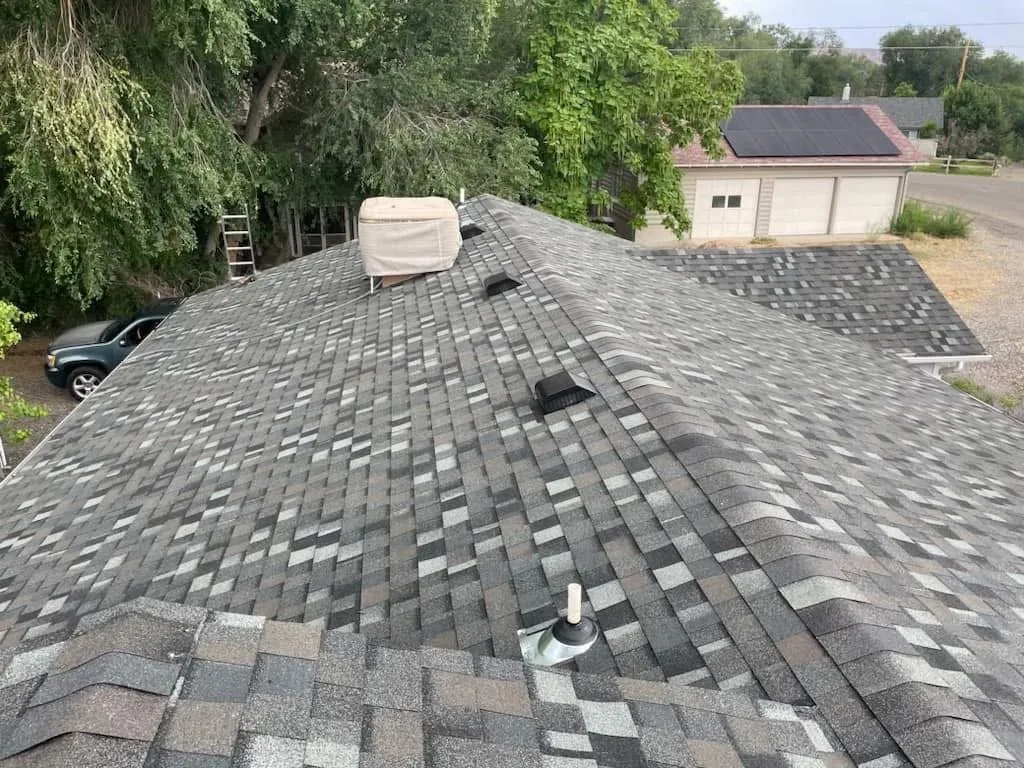
The storm is over, the roof is still white, and there’s a drip coming through the ceiling. A leak after a snowstorm often isn’t a hole in the roof. It can be water backed up behind ice at the eave, snow blown in through a vent, a tired seal around a pipe or chimney, or frost in the attic melting, which isn’t a roof leak at all.
Water also travels. It gets in at one spot, runs along the framing and comes through somewhere else, so the stain is rarely right under the problem.
You don’t need to know which one you have tonight. Tonight’s job is simpler: keep everyone safe, keep the water contained, and write down what happened. Here’s how, in that order.
Tonight: keep people safe first
Stay off the roof
FEMA’s snow load safety guidance calls roof snow removal a dangerous activity that should only be done by qualified people following safety protocols, and University of Minnesota Extension’s winter roof advice is to call in professionals rather than go up yourself. Nothing you can do up there in the dark will change how the night goes. Everything that helps tonight happens inside.
Keep water away from electricity
If water is dripping from a light fixture or ceiling fan, or running down a wall near an outlet, treat that circuit as live. Ready.gov’s flood advice applies here too: don’t touch electrical equipment if it’s wet or if you’re standing in water, and turn off the electricity to prevent shock if it’s safe to do so. The Red Cross adds: never turn the power on or off while standing in water.
So if you can reach the breaker panel on dry floor, switch off any circuit feeding a light or outlet in the wet area. If you’re not sure which breaker it is, turn off the main. If getting to the panel means standing in water, leave it.
Get out from under a sagging ceiling
A slow drip and a ceiling that’s moving are two different things. FEMA lists the warning signs that a roof may be overloaded by snow, among them sagging ceiling boards, popping, cracking and creaking noises, doors or windows that can no longer be opened or closed, cracks in walls, and severe roof leaks. If you see them, FEMA’s advice is to get out of the building promptly and have a local building authority or a qualified design professional take a look. At the very least, keep people and pets out from under a ceiling that’s bulging or sagging with water.
Catch and contain the water
Move what’s underneath. Furniture, electronics, rugs, anything on the floor below the drip. Water spreads along a ceiling before it comes through, so give it more room than seems necessary.
Catch it, don’t fight it. A bucket and towels.
Start drying. Moisture from a winter leak can lead to mold and mildew, and University of Minnesota Extension’s advice is to dry out the wet or damp parts of the house right away, and not to repair the ceiling or walls until they’re dry.
Document it for insurance
Before you move or clean anything, take photos: the ceiling, the walls, the floor, anything that’s ruined. Phone photos carry a date, and an adjuster reading them weeks from now will care about that. If you can see ice along the eaves from the ground, photograph that too.
The Utah Insurance Department’s checklist for a home claim is short and worth following:
- Call your insurance company or agent as soon as possible, with your policy number.
- Take photos or video of the damage.
- Make the repairs needed to prevent further damage, and save every receipt, including the ones for temporary repairs.
- Don’t have permanent repairs made until your insurance company has inspected the property.
The National Association of Insurance Commissioners adds that most insurance companies have deadlines for reporting claims, and suggests listing what’s damaged along with the photos.
Whether a leak after snow is covered depends on your policy and what caused it. Carriers generally expect you to prevent further damage, so keep the receipts and the photos. Your policy is the final word; ask your carrier. If hail or wind is behind it, our insurance claims page explains how a claim works. If it turns out to be wear rather than weather, we’ll tell you that too.
Why snow makes roofs leak
Ice dams
Heat escaping from the house melts snow on the upper part of the roof, and the water refreezes at the cold eave, building a ridge of ice. Water pools behind it and works back up under the shingles, which are made to shed water, not hold it back. A leak near the top of an exterior wall, with heavy ice along the eave above it, points this way. Our ice dam article covers what causes them and what actually stops them.
Snow blown in through vents
Roof vents are openings by design, and wind can push snow into them. The Journal of Light Construction’s roof ventilation guide notes that in areas prone to wind-driven rain and snow, moisture can be blown into soffit vents, and it recommends baffles in high-wind regions. (Wind does other damage too: here’s what canyon winds do to a roof.)
Flashing and pipe boots
Flashing is the metal where the roof meets a wall, a chimney or itself. When we fix a roof leak, flashing is the source we find most often, and it fails long before the shingles do. FEMA notes that roofs with obstructions such as chimneys collect snow drifts, and a drift against a chimney or a wall puts snow, and later meltwater, right where the flashing is.
Pipe boots are the other usual suspect. The rubber collar around every plumbing vent dries out in our sun and splits, and melting snow finds the crack. Shingles lifted by wind earlier in the year are the same story: snow and freeze-thaw push water under them in winter.
Attic frost that looks like a leak
Not every winter drip comes through the roof. The U.S. Department of Energy’s Building America Solution Center explains that when moist air from inside the house escapes into a cold attic that isn’t well ventilated, condensation is likely, and in cold weather it often forms as frost. When warmer conditions arrive, that moisture turns back into liquid, and from inside the house water is water, wherever it came from. The fix for frost is in the attic, not on the shingles: the Solution Center’s guidance is to find the sources of air leakage and seal them.
What not to do
- Don’t chip at ice on the roof. FEMA says not to use sharp tools, such as picks, to remove roof snow. Chipping at an ice dam breaks shingles.
- Don’t shovel the roof yourself. FEMA says snow removal should only be done by qualified people, and that clearing a roof completely can seriously damage the roof covering and possibly lead to leaks. Its guidance is to leave at least a couple of inches.
- If you rake from the ground, use the right rake. FEMA’s snow removal guidance says that in some cases a long-handled non-metallic rake can be used from the ground to reduce the risk, warns that metal rakes can damage roofing and pose an electrocution risk, and says to stay clear of the eave, since roof snow can slide at any moment. University of Minnesota Extension adds that even a roof rake may damage roofing, so go gently.
- Don’t set a ladder on ice. The Occupational Safety and Health Administration’s ladder safety card calls for a stable, level surface and rungs, steps and feet free of anything slippery. OSHA also says to look for overhead power lines before handling a ladder.
When to call us
For an active leak, start with our emergency roof repair page. We’re a local crew, not a call center with a night desk. Our phones are answered Monday through Saturday, 8 AM to 5 PM. After hours, leave a message with your address and what you’re seeing, or send the form, and we’ll call you back the next business morning.
Active leaks go to the front of our schedule, ahead of estimates and planned work. We aim for same-day or the next business morning, depending on the hour. After a big storm the whole county calls at once, and we work the list in order, leaks first. How fast someone gets on the roof depends on the weather and whether it’s safe to be up there. If it’s mid-storm or iced over, we’ll talk you through protecting the inside until it is.
When we get there:
- Temporary weatherproofing comes first, so the next storm doesn’t add to the damage before the real repair. We’ll usually tarp when the roof is safe to get on.
- We find the entry point, not the stain. They’re rarely the same place.
- We photograph the damage before we touch anything, and after.
- You get a straight read on whether it’s a repair or the start of a claim.
From there, a roof repair is sized to the problem.
Common questions
Will the leak stop once the snow melts?
It might. But whatever let the water in is still there, and the next storm will find it. A new ceiling stain after weather means water is moving. Photograph it, note the date, and call while the trail is fresh.
Can a roof leak be repaired in winter?
Yes. Most repairs can be done in cold weather. On an emergency call, temporary weatherproofing comes first, so the next storm doesn’t add to the damage before the real repair.
How do I know if it’s a roof leak or attic frost?
From inside, they can look the same. Attic frost turns back into water when the weather warms, so the timing alone won’t tell you. An inspection that follows the water, on the roof and in the attic if needed, settles it.
The honest next step
If the drip stopped when the snow melted, or you’re not sure whether it was the roof or the attic, a free roof inspection is the easy way to find out. We get on the roof, not just look from the curb, photograph everything, walk you through it in plain language, and tell you honestly whether anything needs doing. No cost, no obligation, and you keep the photos whether or not you hire us.
The inspection is free, and we photograph everything we find.