
Nails and staples leave holes in shingles, fascia and siding, and holes let water in. Plastic clips on the gutter edge or the shingle edge hold a strand without puncturing anything. Hang everything from a ladder, not the roof, with a helper, on a dry, calm day, and keep the ladder well away from power lines. Use outdoor-rated lights on a GFCI outlet, keep big decorations on the ground, and take the lights down one clip at a time.
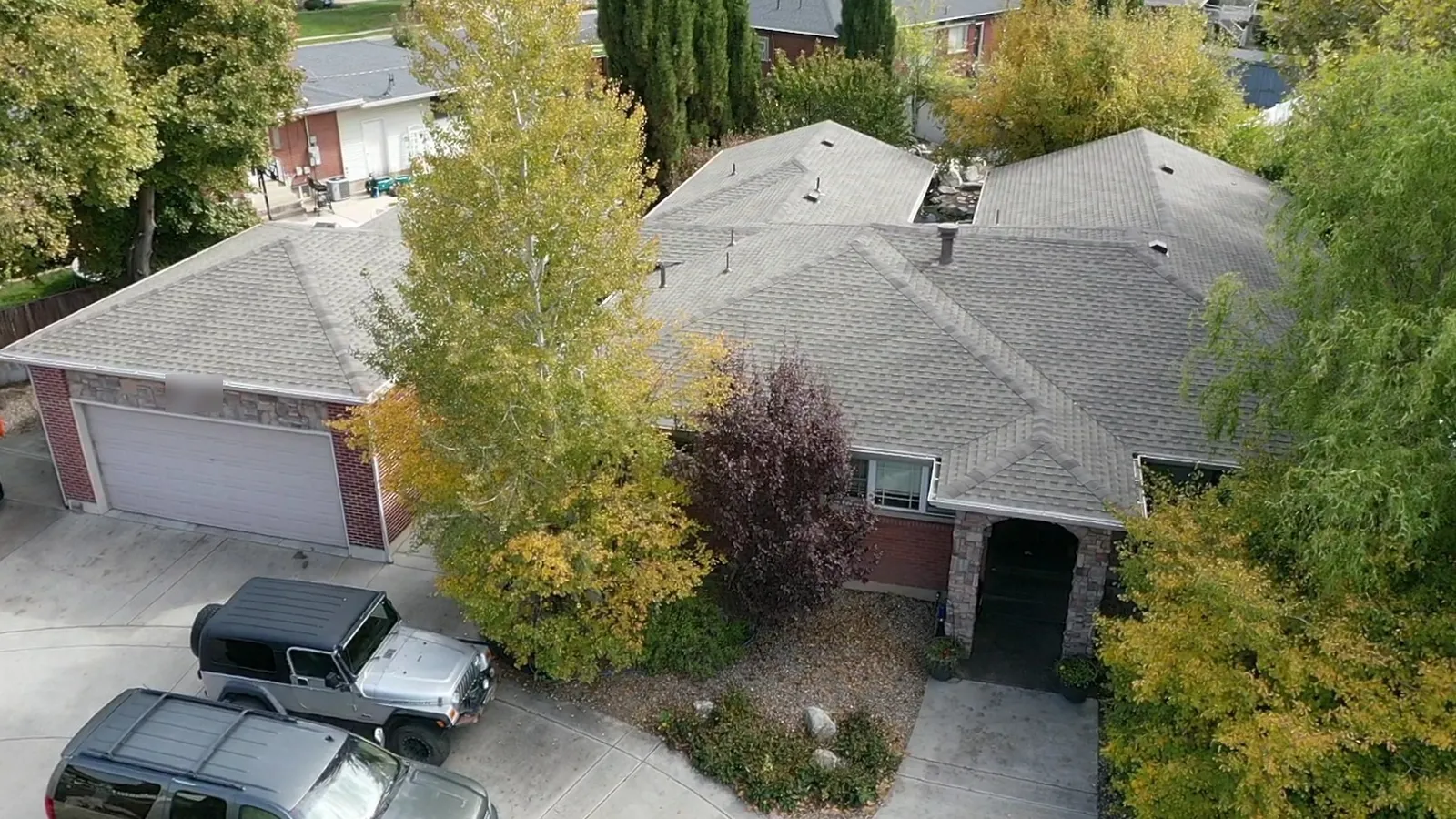
Holiday lights don’t have to cost your roof anything. The damage comes from three habits: fastening the strands with nails or staples, walking on the shingles to reach the high spots, and pulling the lights down by the cord in January. Each one has a simple fix.
The bigger risk is to the person hanging them. The U.S. Consumer Product Safety Commission puts Christmas decorating injuries at about 160 a day over the holiday season, with falls behind nearly half of them. In the 2023 season, which the CPSC counts from November 2022 through January 2023, roughly 14,900 people needed emergency room treatment after a decorating injury.
Here’s how to hang lights so the roof and the person on the ladder both get through the season fine.
No nails, no staples
Shingle maker GAF is blunt about this: don’t nail or staple decorations to your shingles, fascia or siding. The tiny holes can draw in moisture, which can lead to leaks and rot. Even small holes can let water reach the roof deck under the shingles.
Fasteners are hard on the lights, too. GAF points out that a nail or staple can pierce the insulation on the cord, which can lead to sparks.
If earlier years’ lights were nailed or stapled up, those holes are still there. Pulling the fastener out doesn’t close the hole. A row of small holes along the eave is exactly what a free roof inspection is for, and if they need attention, that’s a roof repair sized to the problem.
Pick the right clip
Plastic light clips do the job without a single hole, and some light sets come with them. Which one you want depends on where the strand goes.
Gutter clips. The most common kind clips onto the lip of the gutter and holds either a single bulb or the wire between bulbs. Icicle lights hang the same way, with the main strand clipped along the gutter line. Keep the load light. Heavy strands and decorations can make a gutter sag or pull it loose.
Shingle clips. Universal clips attach to the bottom edge of the shingles or to a gutter. GAF’s advice is to put the clips up first, spaced 6 to 8 inches apart, and then hook the lights on. Slide each clip onto the edge. Don’t pry a shingle up to work a clip underneath. Each shingle is held down by a strip of sealant, and that seal is what keeps it flat when the wind comes over the roof. A shingle that’s been lifted can lie back down and look fine while it’s no longer sealed. (Here’s what canyon winds do to a roof.)
Ridge clips. Peak clips grip the shingles along the ridge, the very top of the roof. GAF notes that they take access to the ridge, which is why professionals often hang them. If you want lights along the ridge line, hire it out.
Siding clips hold a vertical run of lights down a corner or along a wall.
Magnetic clips for metal roofs. On a metal roof, magnetic clips hold the bulbs or sockets to the panels or the flashing, so nothing gets screwed into the metal. With magnetic clips, GAF says, it’s OK to take the lights down by pulling the strand.
Or skip the roof. A projector on the lawn that shines a display onto the house, or lights wrapped around trees, bushes or a light pole, needs no ladder and no clips at all.
Work from a ladder, not the roof
Hang everything from a ladder. GAF’s advice is to leave walking on the roof to professionals. Scrambling around on shingles can knock granules loose and damage them, and an older roof may not be strong enough to take foot traffic without shingle damage.
GAF also says to climb only with a partner nearby, someone to hold the ladder steady and lend a hand. The Occupational Safety and Health Administration’s ladder safety card is written for workers, and OSHA counts falls from portable ladders among the leading causes of on-the-job deaths and injuries. Its rules work just as well at home:
- Look up. Check for power lines overhead before you carry or raise the ladder, and don’t use a metal ladder near them. Rocky Mountain Power’s safety guidance is to stay at least 10 feet from a power line and from anything touching it.
- Inspect it first. If any part of the ladder is damaged, don’t climb it until it’s repaired, or replace it.
- Set it on firm, level ground, never on boxes or anything else to gain height. Keep the rungs and feet free of anything slippery, like mud, frost or snow.
- Get the angle right. Set the base about 1 foot out from the wall for every 4 feet of ladder up to where it rests.
- Check the locks on an extension ladder before you climb.
- Keep three limbs on the ladder at all times, both hands and a foot or both feet and a hand, and climb facing the rungs. Keep your body centered between the side rails. When the next clip is out of reach, climb down and move the ladder. Never move it with someone on it.
- Never stand on the three highest rungs of an extension ladder.
- Mind the load rating, counting your own weight plus the lights and anything else you carry up.
Pick the day. GAF recommends a dry day, waiting a couple of days after rain, and skipping days with high winds. Earlier in the season is easier, too. Davis County puts a winter’s snowfall at roughly 60 inches on the valley floor and up to 90 on the high benches, and once the snow comes, keeping frost and ice off the rungs and the ground under the ladder gets harder.
Plug in the right way
- Use lights made for outdoors. The CPSC says to use only lights tested for safety by a nationally recognized testing laboratory, and to check the label to be sure they’re certified for outdoor use. If a string carries UL’s holographic label, green marks an indoor-only set and red marks a set rated for indoor or outdoor use.
- Look over every set, even a brand-new one, for cracked or broken sockets, bare or frayed wire and loose connections. A set with any of those goes in the trash.
- Plug into a GFCI. Outdoor lights go only into a ground-fault (GFCI) protected outlet or a portable GFCI.
- Use the right extension cord, one rated for the intended use, in good condition, with no cuts or fraying.
- Don’t overload. The CPSC’s limit is three sets of incandescent lights connected end to end, and it says never to overload an outlet. LED strings stay cooler and use less energy. For any string, go by the limit on its package.
- Turn them off when you go to bed or leave the house. A plug-in timer can do it for you.
Keep the big decorations on the ground
Inflatables, statues and light-up scenes belong in the yard. GAF warns that securing heavy or oversized decorations to a rooftop can damage shingles and may affect the roof’s warranty, and that strong winds can rip a rooftop decoration loose and tear shingles with it.
Davis County has its own reason to take that seriously: east canyon winds. Ahead of one January 2021 event, KSL reported that Farmington and Centerville were likely to see peak winds of 50 to 65 mph, and the National Weather Service advised securing loose outdoor objects. Even on the lawn, GAF suggests unplugging an inflatable or turning off its fan in high winds or heavy snow.
Taking them down
Take the lights down in reverse: one clip at a time, from the ladder, with your helper there. GAF’s warning is simple. Grabbing one end and yanking can tear shingles and pull gutters down. Coil the strand as you go, and next year’s job is easier.
If the lights come down in January, that’s Davis County’s coldest month, with an average low of 20 degrees. Wait for a dry day with the ice gone from the ground and the eaves. If a strand is frozen into ice at the eave, leave it until the ice melts. Pulling it free can tear shingles, and chipping at the ice breaks them.
If your eaves grow a thick ridge of ice every winter, that’s an ice dam, and our ice dam article explains what causes it and what stops it.
While you’re up at the eaves
From the ladder, you get a closer look at the edge of the roof than you get all year from the ground. GAF suggests taking a few minutes to look for damage while you’re working there. Things worth noticing, without stepping onto the roof:
- Shingle edges that are lifted, creased or missing pieces
- Bare spots where the granules have worn off
- Old nail or staple holes from earlier years’ lights
- A drip edge (the metal trim along the edge of the roof) that’s bent or loose
Take a photo of anything that looks off, and leave the closer look to someone who works on roofs.
Common questions
Can I staple lights to the fascia instead of the shingles?
GAF’s advice covers the fascia and siding too: no nails or staples. The holes can draw moisture into the wood. Use gutter or shingle clips along the roof edge, and siding clips on the walls.
Are LED lights easier on the roof?
They’re easier on the wiring. GAF notes that LEDs don’t heat up the way incandescent bulbs do, and they use less energy. For the roof, how the lights are attached matters more than what kind they are.
Will light clips affect my roof warranty?
Clips that slide on and come off without puncturing anything are what GAF recommends. Its caution is about fastening heavy or oversized decorations to the roof, which it says may affect the warranty. If something has to be attached to the roof itself, read your shingle warranty first.
The honest next step
If you spot something while the lights go up, or taking them down leaves you wondering about a few shingles, a free roof inspection is the easy way to find out. We get on the roof so you don’t have to, photograph everything, and give you a straight answer: what’s fine, what’s worth watching, and what, if anything, needs doing.
The inspection is free, and we photograph everything we find.