Canyon wind damage shows up as lifted tabs, creased shingles and missing ridge caps on the east- and north-facing slopes. Walk the yard first, then look at the roof from the ground with binoculars or a phone zoom. Lifted shingles that lie back down are still broken, and a free inspection is the honest way to find out how many.
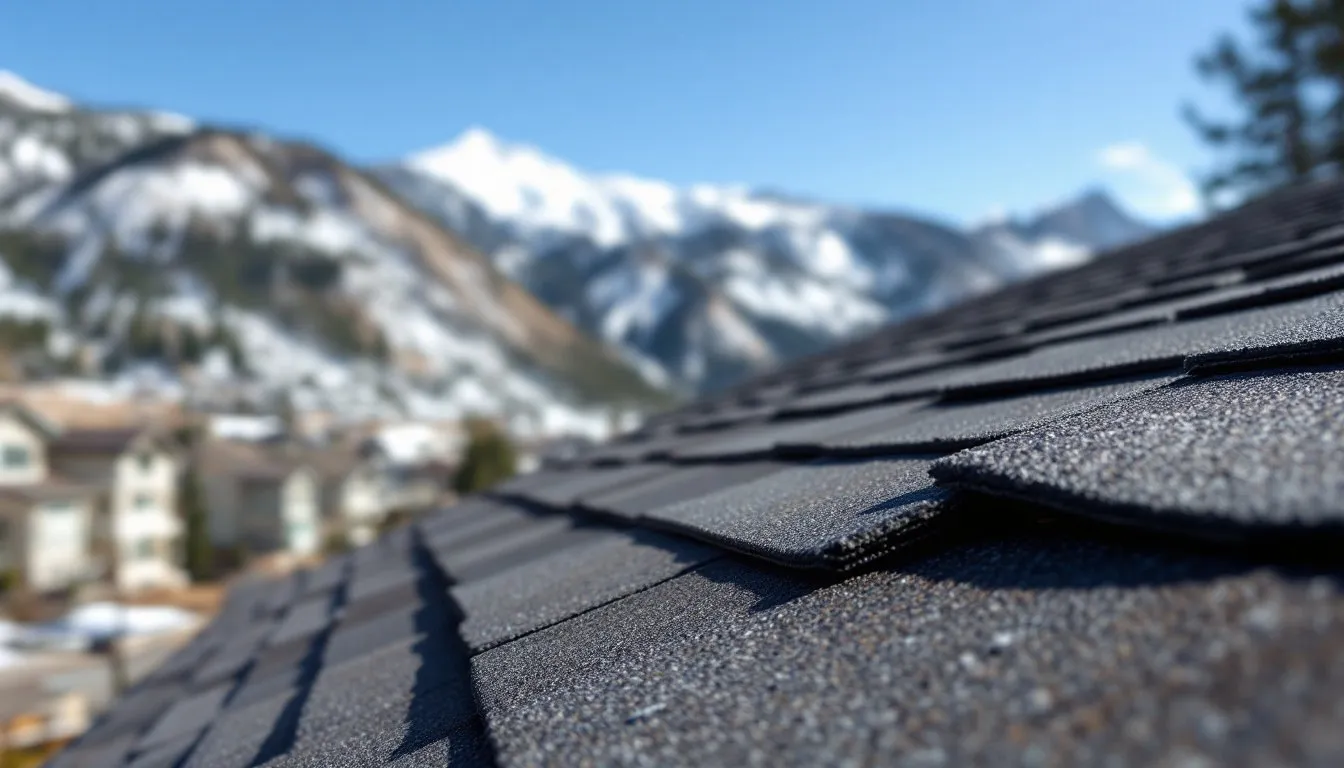
Anyone who has lived in Farmington, Centerville or Kaysville for a winter knows the sound. A high-pressure system sets up over the Uinta Basin, the air spills west through the canyons, and by two in the morning it is coming off the bench at highway speed. The National Weather Service issues wind advisories for these events. Roofers see the results for weeks afterward.
Canyon winds are downslope winds. They accelerate as they drop out of the canyon mouths and spread across the bench before they lose speed over the flatter ground west of the freeway. That is why two houses a mile apart can have a completely different night: the one on the bench, with an east-facing roof slope pointed straight at the canyon, takes the full load, and the one near the lake barely notices.
On a roof, the wind does not push shingles down. It lifts them. Air moving fast over a slope creates low pressure above the shingles, and the sealant strip that holds each tab to the one below it is what resists that lift. Sealant weakens with age and with cold, and a February canyon wind is exactly the combination that breaks it.
Lifted tabs that lie back down. This is the most common damage and the easiest to miss. The wind breaks the seal, lifts the tab, and drops it. From the ground the roof looks fine. But the seal is gone, and the next storm lifts it further, and eventually it creases or tears. On an inspection we find these by hand: a tab that lifts with light finger pressure has lost its seal.
Creased shingles. A tab that folded back hard enough leaves a horizontal crease across it. Creased shingles are cracked at the mat even if the surface looks intact, and they leak at the crease line once water finds it.
Missing tabs and ridge caps. The obvious one. Ridge caps go first because they sit at the highest, most exposed point and have the least material holding them down.
Lifted flashing and loose vents. Step flashing at walls and chimneys, and the caps on turbine or box vents, can work loose in the same wind. Both are common leak points after a wind event.
Debris damage. Branches, fence panels and neighbors’ trampolines. If something hit the roof, the shingles under the impact are damaged even if you cannot see it from the ground.
Start in the yard. Shingle tabs, ridge cap pieces and granules in the grass mean the roof lost material. Check the gutters and the downspout splash blocks for granules too.
Then look at the roof from the ground, ideally from the street and from the back yard, with binoculars or a phone camera zoomed in. Look along each slope for tabs that sit at a different angle from their neighbors, for shingles that look shorter than the row (a folded tab), and for any bare spots.
Do not get on the roof. Wind-lifted shingles are loose underfoot, and the day after a wind event is not the day to find that out.
Take photos with the date visible, or just leave the timestamp on. If it turns into a claim, a dated photo from the morning after is the most useful thing you can have.
A few lifted tabs on one slope is a repair, and usually a small one. A slope with widespread lifting, creasing across many shingles, or missing ridge along the whole run is a different conversation, because the sealant failure is not going to stop at the tabs you can see.
Many Utah homeowner policies cover wind damage under the same wind and hail deductible that covers hail. Whether a claim is worth filing depends on how much of the roof is affected and what that deductible is, and that is a judgment call to make with the photos in front of you, not a rule. We will tell you which side of the line a roof is on, and if it is a repair, we will say so.
A free inspection after a canyon wind event takes about half an hour. We walk every slope, test the tabs by hand on the exposed sides, photograph what we find, and tell you whether it is a handful of shingles or a slope. If it is nothing, that is a good morning.
If you are on the bench and the wind was bad enough to make the news, it is worth the half hour. And if it does turn into a replacement, here is how to read the estimate before you sign one.
The inspection is free, and we photograph everything we find.